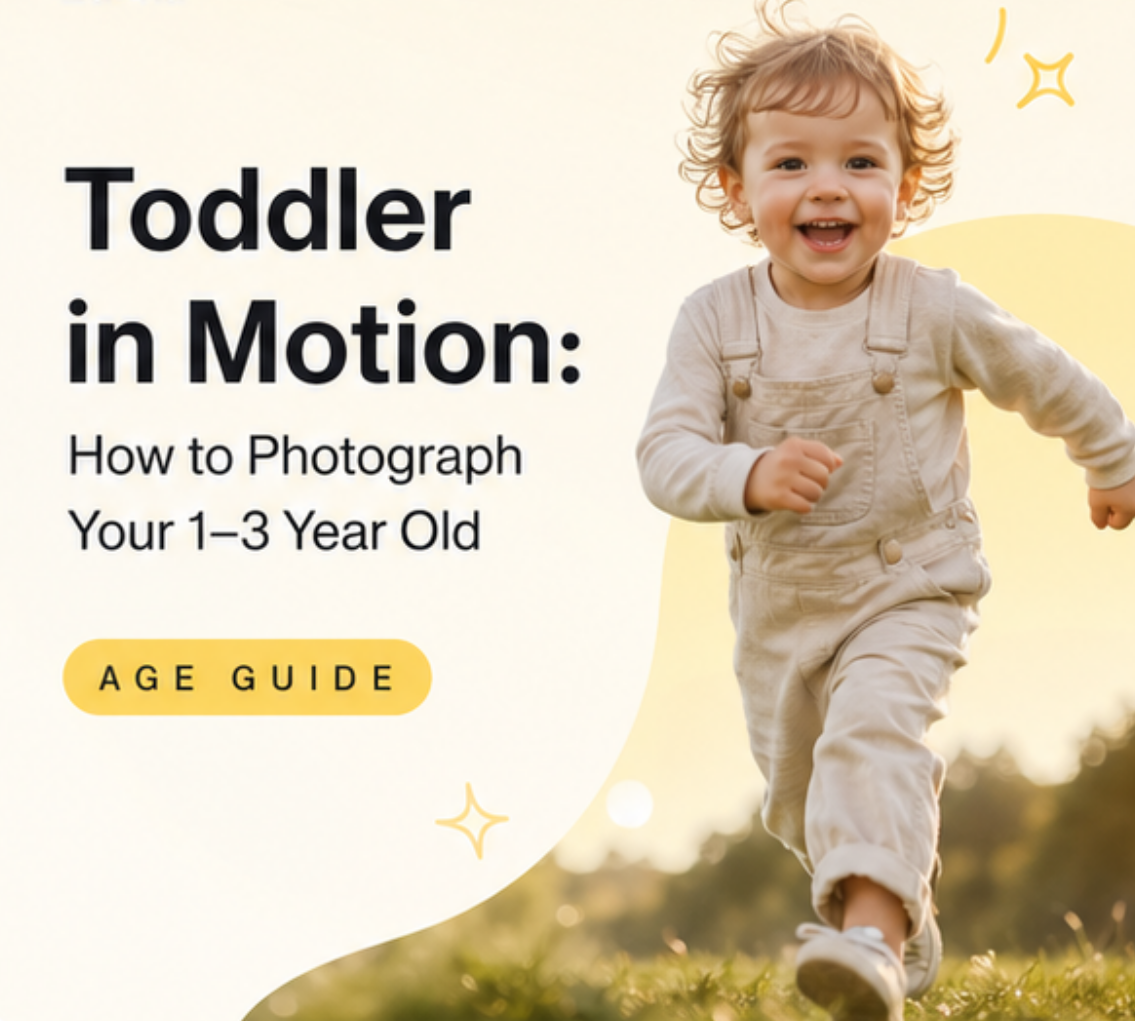
Toddler in Motion: How to Photograph Your 1-3 Year Old
The Bottom Line
Photographing toddlers isn't about getting them to pose — it's about embracing their boundless energy. Use fast shutter speeds (1/500+), continuous shooting mode, and get down to their level. The best shots come when you stop trying to control the moment and start capturing the chaos.
Why Toddlers Are Photography's Greatest Challenge
If you've ever tried to photograph a toddler, you know the struggle. One moment they're staring at a butterfly, the next they're running full speed toward a puddle. Unlike newborns who sleep through photoshoots or older children who can follow directions, toddlers exist in a beautiful state of perpetual motion.
Constant Motion
Toddlers move constantly — walking, running, climbing, and exploring every second they're awake.
Short Attention Span
With attention spans of just 3-5 seconds, you have milliseconds to capture the perfect shot.
Big Emotions
Joy, frustration, curiosity, and meltdowns can happen within minutes — all worth capturing.
Unpredictable Magic
The best moments happen spontaneously — a giggle, a discovery, a tender moment with a sibling.
The research says:According to child development experts, toddlers take an average of 2,368 steps per hour when awake, and their attention span is roughly 2-3 minutes per year of age. This means a 2-year-old might focus on something for 4-6 minutes maximum — but usually much less.
Age-by-Age Photography Guide
12-18 Months: The Wobbly Walker
First steps, new independence
This is the age of first steps, wobbly walks, and newfound independence. Your little one is discovering they can move on their own, and their face lights up with each success.
Moments to Capture:
- First independent steps and walking practice
- Push toys and walking aids
- Messy mealtimes and self-feeding attempts
- First words and pointing at everything
Pro tip: Position yourself low and at a slight distance to capture those precious walking-toward-the-camera moments.
18-24 Months: The Explorer
Running, climbing, discovering
Now confidently mobile, your toddler is running, climbing, and getting into everything. Their personality is really emerging, and you'll see more complex emotions and interactions.
Moments to Capture:
- Running and playground adventures
- Helping with chores (sweeping, cooking)
- Reading books and pointing at pictures
- Dancing and music appreciation
Pro tip: Use burst mode constantly. You'll delete 90% of the photos, but the 10% you keep will be gold.
2-3 Years: The Personality
Imagination, independence, conversation
The "terrible twos" bring big emotions, but also incredible imagination, emerging language, and a unique personality. This is when you'll capture expressions and moments that truly define who they're becoming.
Moments to Capture:
- Imaginative play and dress-up
- Art projects and creative messes
- Conversations and storytelling
- Sibling interactions and friendships
Pro tip: At this age, you can start using simple games like "show me your dinosaur roar" to get genuine expressions.
5 Essential Techniques for Motion Photography
Embrace the Chaos
Stop trying to pose your toddler. The magic happens when you let them be themselves. Follow their lead, stay ready, and capture the spontaneous moments.
Get on Their Level
Crouch, kneel, or even lie on the ground. Shooting from their eye level creates more engaging, intimate photos that show the world from their perspective.
Use Continuous Shooting
Burst mode is your best friend. Hold down the shutter and capture 5-10 frames per second. You'll catch the split-second expressions that single shots miss.
Anticipate the Moment
Learn your toddler's patterns. If they always laugh after peek-a-boo, be ready. If they love a certain toy, have your camera up before you give it to them.
Capture the In-Between
Don't just photograph the big moments. The quiet concentration, the sideways glances, the mid-run expressions — these often become the most treasured photos.
Camera Settings & Equipment
Whether you're using a smartphone, mirrorless camera, or DSLR, these settings will help you freeze motion and capture sharp images of your active toddler.
| Setting | Recommended | Why |
|---|---|---|
| Shutter Speed | 1/500s or faster | Freezes motion, prevents blur |
| Aperture | f/2.8 - f/4 | Faster focus, subject isolation |
| ISO | Auto (up to 3200) | Allows faster shutter speeds |
| Focus Mode | Continuous AF (AI Servo) | Tracks moving subjects |
| Drive Mode | Continuous/Burst | Captures sequences |
Smartphone Users
- Use burst mode (hold shutter button) for action shots
- Enable HDR for better dynamic range
- Tap to focus on your toddler before shooting
- Use natural light whenever possible
The Hands-Free Advantage
With a wearable camera like Eukka, you don't have to choose between playing with your toddler and photographing them. The AI automatically captures the best moments while you focus on being present.
Getting Genuine Expressions
Forget "say cheese!" — that only produces forced smiles. Here's how to capture your toddler's authentic personality:
Silly Sounds
Animal noises, raspberries, and unexpected sounds almost always get genuine laughs.
Chase Games
"I'm gonna get you!" creates excitement, movement, and big smiles.
Favorite Songs
Play their favorite music and capture the dancing and joy that follows.
Bubbles & Balloons
Simple props that create wonder, excitement, and beautiful candid moments.
Timing Matters
Schedule photo sessions right after naps and meals when your toddler is well-rested and fed. A hungry or tired toddler is a recipe for meltdowns, not magical photos. The golden hours (early morning or late afternoon) provide the best natural light.
Frequently Asked Questions
What's the best time of day to photograph toddlers?
Early morning or late afternoon (golden hour) provides the softest, most flattering natural light. Also consider your toddler's schedule — avoid nap times and photograph when they're well-rested and fed.
How do I get my toddler to stay still for photos?
Don't try! Instead, embrace movement photography. Use fast shutter speeds (1/500+), continuous shooting mode, and capture them doing activities they love. The best toddler photos often come from candid, action-filled moments.
What camera settings work best for active toddlers?
Use Shutter Priority mode with 1/500 second or faster, continuous autofocus (AI Servo/AF-C), burst mode for multiple shots, and higher ISO if needed. Wide apertures (f/2.8-f/4) help with faster focus acquisition.
How can I capture genuine smiles from my toddler?
Avoid "say cheese" — instead, make them laugh with silly sounds, peek-a-boo games, or their favorite songs. Capture them playing with beloved toys or interacting with family members for the most genuine expressions.
Is a wearable camera good for toddler photography?
Yes! Wearable cameras like Eukka are excellent because they capture candid moments hands-free while you play and interact. This results in more natural, authentic photos without the barrier of holding a camera or phone.
Related Articles
Ready to Capture Your Toddler's Adventures?
Stop choosing between playing with your toddler and photographing them. Eukka captures the moments automatically, so you can be fully present.